When I say "bias cut", what probably comes to mind is sultry, clinging evening gowns from the 1930's or the 1990's. But a bias cut can be used to great effect in tailored garments as well.
 Image from Threads Magazine
What is bias cut? The straight grain of a fabric, either vertical or horizontal, has no stretch, unless it is a knit or is woven with a stretch fiber such as spandex or lycra. But when you turn the pattern 45 degrees, you are cutting on the bias, which has a gentle give and allows a softer and more fluid result. Using fabric cut on the bias is challenging, as it can stretch out of shape during the sewing process, so it requires more time and care to avoid distortion of the garment.
Here are a couple of examples of tailored garments with a bias cut from 1963, both made of linen. Notice how cutting the stiff linen on the bias gives these garments more softness, shaping, and fluidity. At the same time, the weight of the fabric allows the garment to float away from the body without clinging, a plus during the heat of summer.

An overblouse dress by Norman Norell in magenta linen. The front of the overblouse is cut on the bias so it floats softly over the underdress, but contours lightly to the body. A leather sash slips through slits in the front princess seams and is tied at the waist for more definition.
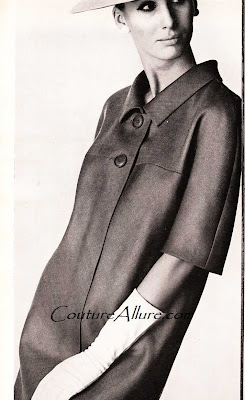
This shift dress by Ben Reig is fashioned from brown linen. A front zipper is hidden behind the decorative placket. Notice how the dress floats next to the body while the bias cut of the linen allows subtle shaping.

Just added at Couture Allure, this early
60's overblouse dress by Herbert Kasper in black rayon. The overblouse is cut on the bias for fluid shaping that softens the square cut.


 A handsome and beautifully tailored suit by Norman Norell from 1952.
 One more garment from the Brooklyn Museum collection. This 1958 evening dress by Norman Norell is trimmed with rows of black fox fur. This dress was not shown in the exhibit, but is in the book, "High Style" that accompanies it.
 Image from Threads Magazine
 An overblouse dress by Norman Norell in magenta linen. The front of the overblouse is cut on the bias so it floats softly over the underdress, but contours lightly to the body. A leather sash slips through slits in the front princess seams and is tied at the waist for more definition.
 This shift dress by Ben Reig is fashioned from brown linen. A front zipper is hidden behind the decorative placket. Notice how the dress floats next to the body while the bias cut of the linen allows subtle shaping.



 Posts